
Tour Package

Uncategorized

Uncategorized

The Sun King’s Legacy: The Monumental Splendor of Abu Simbel Introduction

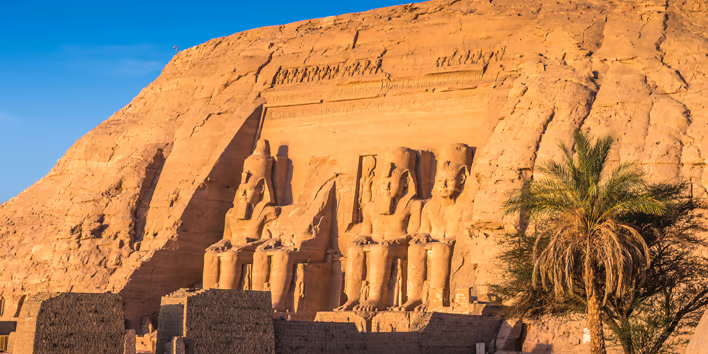
The Sun King’s Legacy: The Monumental Splendor of Abu Simbel Introduction by SHAOL TECH – May 24, 2026 Deep in the southern reaches of Egypt, near the border with Sudan and overlooking the tranquil, sapphire waters of Lake Nasser, lies a monument that defines royal ego, artistic perfection, and architectural majesty. This is Abu Simbel. Constructed by Egypt’s most prolific builder, Pharaoh Ramses II (Ramses the Great), during the 13th century BCE, this remote archaeological site is a breathtaking marvel. For centuries, it lay completely forgotten, swallowed up by the shifting desert sands, until its accidental rediscovery in 1813. Today, it stands proudly as one of the world’s most spectacular historic testaments to a king who wished to become immortal. The Great Temple of Ramses II: A Mountain Carved by Hand Unlike traditional Egyptian temples built from quarried stone blocks, the twin temples of Abu Simbel were carved directly into the living sandstone rock of a desert mountain. The façade of the Great Temple is dominated by four colossal, 65-foot-tall statues of Ramses II seated on a throne, wearing the double crown of Upper and Lower Egypt. The sheer scale is staggering—the ears of each statue alone are over three feet long. At the pharaoh’s feet are smaller statues representing his beloved Chief Wife, Queen Nefertari, his mother, and his children. Step through the grand entrance between the colossi, and you enter a magnificent hypostyle hall supported by eight massive pillars carved in the likeness of Ramses transformed into Osiris, the god of the underworld. The walls are covered in incredibly detailed, beautifully preserved relief carvings depicting the pharaoh’s military triumphs, most notably the famous Battle of Kadesh, where thousands of chariots clash in stone-carved action sequences. The UNESCO Relocation Miracle: Moving a Mountain While Abu Simbel is an ancient wonder, it is also home to one of the greatest feats of modern civil engineering in human history. In the 1960s, the Egyptian government began construction on the Aswan High Dam. While the dam brought electricity and flood control to the nation, it also created Lake Nasser—a massive artificial reservoir whose rising waters threatened to permanently submerge Abu Simbel and other historic Nubian temples. Recognizing the imminent loss of this global treasure, UNESCO launched an international rescue campaign. Between 1964 and 1968, an international team of archaeologists, engineers, and operators literally cut the two temples into over $1,000$ precisely numbered blocks, some weighing up to 30 tons. These blocks were carefully transported up a custom-built hill, 200 feet higher and 600 feet further back from the water, and reassembled inside a massive, artificial concrete dome disguised as a natural mountain. The reconstruction was so exact that the seams between the blocks are completely invisible to the naked eye today. The Phenomenon of the Sun Festival The ancient Egyptian architects possessed an extraordinary understanding of astronomy. They aligned the Great Temple so precisely that twice a year—on February 22 (the date of Ramses II’s ascension to the throne) and October 22 (his birthday)—the rays of the rising morning sun pierce through the dark entrance, travel exactly 200 feet down the long inner hall, and illuminate the dark sanctuary at the very back of the temple. During this solar alignment, the sunbeams light up three of the four statues sitting in the inner sanctum: Ramses II, Amun-Ra, and Ra-Horakhty. True to ancient myth, the statue of Ptah—the god associated with the underworld and darkness—is intentionally left in shadow. Thousands of travelers from around the globe gather at Abu Simbel during these specific dates to witness this breathtaking marriage of ancient astronomy and spiritual engineering. Conclusion & Your Next Adventure Abu Simbel is an awe-inspiring destination that rewards those who travel off the beaten path. Standing before the monumental statues of Ramses II is a poetic reminder of Egypt’s unmatched, eternal grandeur. ● Plan Your Journey: Because Abu Simbel is located in southern Egypt, it requires a short domestic flight or a scenic morning desert convoy drive from Aswan. Make sure you head over to our Tour Calculator, choose Egypt, change the Duration to allow for a multi-day itinerary, and select a Historical Tour to ensure this magnificent southern wonder is seamlessly woven into your custom travel package!
Uncategorized

Chronicles of Cairo: A Vibrant Journey Through Islamic Heritage and Ancient Markets

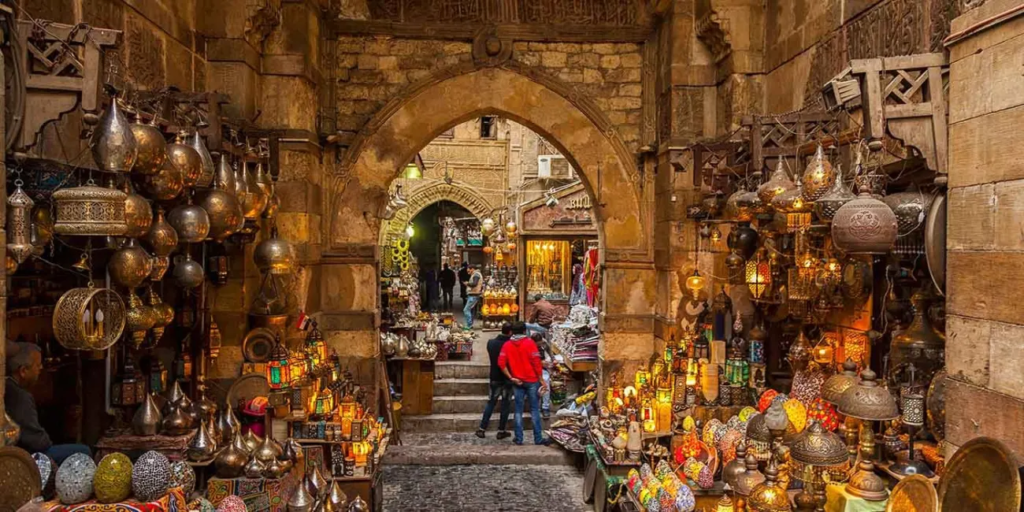
Chronicles of Cairo: A Vibrant Journey Through Islamic Heritage and Ancient Markets by SHAOL TECH – May 24, 2026 Cairo is a city that never sleeps, a sprawling metropolis where the honking of modern car horns blends seamlessly with the hauntingly beautiful, melodic echo of the call to prayer echoing from thousands of historic minarets. Often called Umm al-Dunya (Mother of the World) by locals, Cairo is an intoxicating sensory overload. While many tourists rush through the city just to see the pyramids, the true soul of Egypt lives in the winding alleyways of Historic Cairo. Here, centuries of Islamic architecture, bustling traditional marketplaces, and vibrant community traditions create a living museum unlike anywhere else on earth. Wandering Through Khan el-Khalili: A Sensory Masterpiece Stepping into the historic bazaar of Khan el-Khalili is like taking a portal back to the 14th century. Established originally as a caravan center during the Mamluk era, this massive, labyrinthine market is a vibrant kaleidoscope of colors, sounds, and scents. As you wander through the narrow, stone-paved alleys, you will find yourself surrounded by glittering brass lamps, hand-woven carpets, intricate silver jewelry, mounds of aromatic spices like saffron and cumin, and colorful rows of traditional perfumes. Bargaining is not just expected here; it is treated as a social art form. Shopkeepers will often invite you into their stores, offer you a warm cup of sweet Egyptian mint tea or hibiscus tea (Karkadeh), and engage in friendly conversation before the negotiations even begin. The golden rule of shopping at Khan el-Khalili is to have fun with it—start by offering about half of their initial price and work your way to a mutual middle ground with a smile. The Architectural Wonders of Al-Muizz Street Directly adjacent to the bazaar lies Al-Muizz li-Din Allah al-Fatimi Street, commonly known as Al-Muizz Street. This one-kilometer stretch of road contains the highest concentration of medieval Islamic architectural treasures in the world. As you walk down this pedestrian-only street, you will pass spectacular mosques, madrasas (religious schools), mausoleums, and sabils (historic public water dispensaries) dating back to the Fatimid, Ayyubid, Mamluk, and Ottoman dynasties. The standout masterpiece here is the Complex of Qalawun, featuring a stunning mausoleum with intricate marble inlays, stained-glass windows, and soaring arches that rival any cathedral in Europe. Further down, the towering Mosque of Sultan Hassan showcases the absolute peak of Mamluk architecture, built with massive stone blocks and boasting a cavernous courtyard that makes you feel tiny beneath its soaring walls. At night, the entire street is beautifully illuminated by soft spotlights, casting a magical, romantic glow over the historic stonework. The Oldest Cafe in Cairo: El Fishawy No expedition through Historic Cairo is complete without a rest stop at the legendary El Fishawy Cafe. Tucked away deep within an alley of Khan el-Khalili, this famous coffeehouse has been open continuously, 24 hours a day, for over $250$ years. Its walls are lined with massive, dark-wood mirrors with ornate gold frames, and the atmosphere is thick with history. It was a famous gathering spot for artists, writers, and politicians, including Egypt’s Nobel Prize-winning author Naguib Mahfouz. Sit back on a rustic wooden chair, listen to the street musicians playing the traditional oud, and order a classic Turkish coffee or a fresh mint tea. It is the perfect spot to people-watch and digest the incredible energy of the city. Conclusion & Your Next Adventure Cairo is more than a destination; it is an experience that grabs hold of your senses and leaves a permanent mark on your heart. From its monumental history to the warm, unmatched hospitality of its people, it is a city waiting to be uncovered. ● Plan Your Journey: Ready to immerse yourself in the rich culture and vibrant markets of Egypt’s capital? Use our Tour Calculator on the homepage. Simply input Egypt, select the City Tour option, choose your preferred Duration, and select your ideal hotel comfort level to get an instant price quotation for your custom urban exploration.

Uncategorized

Realm of the Pyramids: Uncovering the Secrets and Magic of Giza Introduction

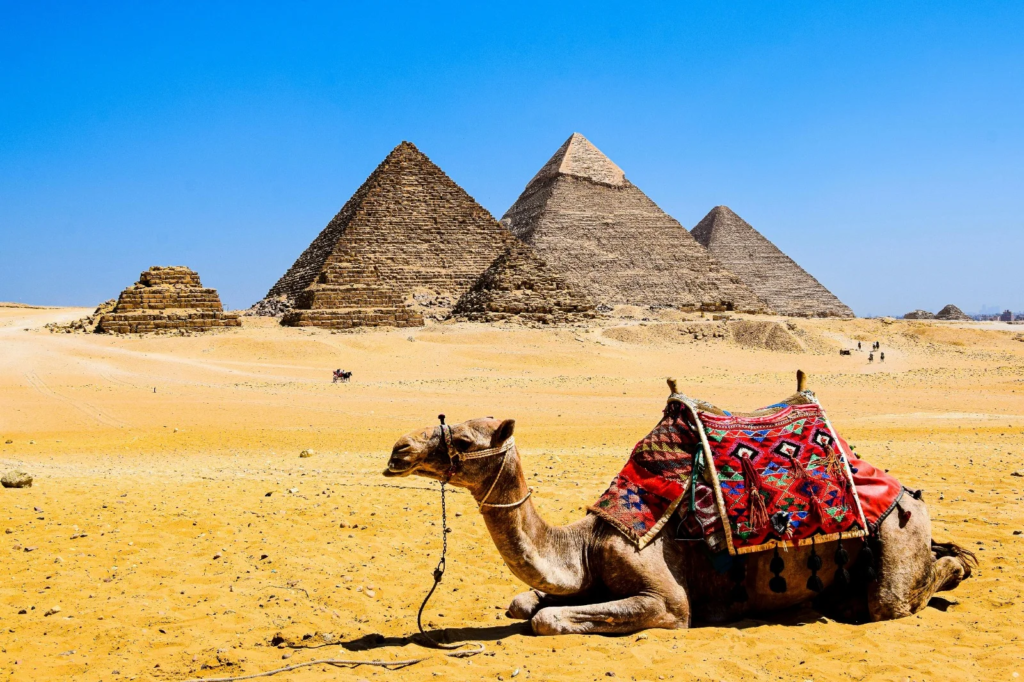
Realm of the Pyramids: Uncovering the Secrets and Magic of Giza Introduction by SHAOL TECH – May 24, 2026 For thousands of years, the Giza Plateau has held a magnetic pull over travelers, adventurers, and historians alike. Rising majestically from the golden sands of the Libyan Desert, just on the outskirts of modern Cairo, these monumental structures stand as the ultimate testament to human ambition, engineering genius, and spiritual devotion. To stand at the base of the Great Pyramid is a deeply humbling experience—a moment where the boundaries of time blur, and you find yourself face-to-face with an ancient civilization that shaped the course of human history. If you are planning an Egyptian odyssey, Giza is not just a stop on the itinerary; it is the breathtaking centerpiece. The Great Pyramid of Khufu: A True Engineering Marvel The crown jewel of the plateau is the Great Pyramid of Giza, built for the Pharaoh Khufu (known in Greek as Cheops) during the Old Kingdom’s Fourth Dynasty around 2560 BCE. For over $3,800$ years, it held the record as the tallest man-made structure on Earth. What truly confounds modern engineers is the sheer precision of its construction. Composed of an estimated $2.3 text{ million}$ stone blocks—some weighing as much as 80 tons—the pyramid aligns almost perfectly with the cardinal points of the compass (North, South, East, and West) with an error of just a fraction of a degree. When you explore the site, you have the rare opportunity to purchase an additional ticket to venture inside the Great Pyramid. The journey involves climbing up through the Grand Gallery—a narrow, steeply inclined passageway with a corbelled ceiling—which leads directly to the King’s Chamber. Inside this stark, granite-lined room lies the empty sarcophagus of Khufu. The air inside is thick, quiet, and heavy with centuries of secrets, offering a surreal experience that stays with you long after you crawl back out into the bright desert sun. The Enigmatic Sphinx: The Eternal Guardian A short walk down the valley reveals the Great Sphinx of Giza, a colossal limestone statue featuring the body of a lion and the head of a human, believed to represent the Pharaoh Khafre. Carved directly out of a single ridge of limestone, the Sphinx acts as the eternal guardian of the plateau’s mortuary complexes. Over the centuries, the Sphinx has been buried up to its neck in desert sand multiple times, which ironically helped preserve it from severe wind erosion. Legends and mysteries surround the statue—from its missing nose (falsely blamed on Napoleon’s troops, though historical records show it was lost centuries prior) to rumors of hidden chambers and libraries buried beneath its paws. Standing at the viewing platform beside the Sphinx offers the quintessential photo opportunity, frame-matching the ancient guardian with the massive pyramids rising directly behind it. Essential Insider Tips for Your Visit ● Be An Early Bird: The Giza Plateau opens early in the morning (usually around 7:00 AM or 8:00 AM). Arriving right at opening allows you to beat the heavy tour buses, experience the monuments in relative peace, and escape the blistering midday desert heat. ● Beating the Solicitations: The plateau is teeming with camel drivers, horse-carriage operators, and souvenir vendors. If you want a camel ride, agree on a firm price before mounting the camel, and clearly state whether tip (baksheesh) is included. A simple, polite but firm “La, Shukran” (No, thank you) is usually enough to keep walking in peace. ● The Panoramic Viewpoint: Make sure your guide or driver takes you to the panoramic viewpoint further back in the desert. From this vantage point, you can view all three main pyramids (Khufu, Khafre, and Menkaure) lined up perfectly in a row, creating the absolute best panoramic landscape photo of your trip. Conclusion & Your Next Adventure The Giza Plateau is a place where myth meets reality. Reading about it or seeing photos simply cannot prepare you for the emotional weight of seeing these monolithic wonders with your own eyes. ● Plan Your Journey: Are you ready to witness the legacy of the pharaohs firsthand? Head over to our interactive Tour Calculator, select Egypt as your destination, and choose the Historical Tour type. You can fully customize your stay with 3-star, 4-star, or luxury 5-star accommodations to match your travel style, and calculate your custom package price instantly!

Scroll to Top